Why Problem-Solving Skills Matter in IT
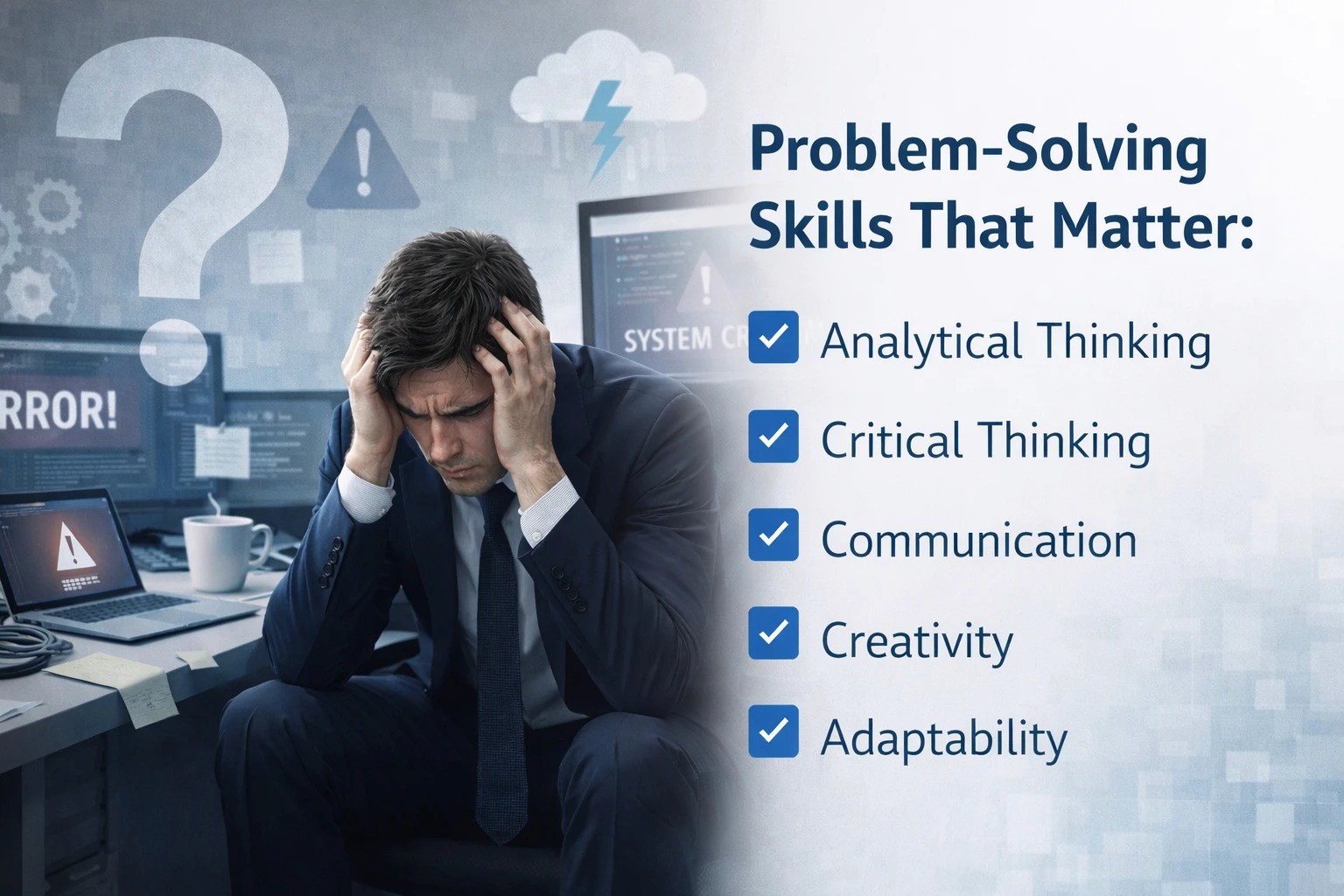
In the IT industry, tools, languages, and technologies keep changing. What remains constant is the need to solve problems. Whether someone works in development, testing, support, data, or cloud roles, their daily work revolves around identifying issues, understanding root causes, and finding reliable solutions. This is why problem-solving skills matter more than memorizing syntax or tools.
In real IT jobs, problems are rarely clearly defined. Requirements may be incomplete, bugs may appear only in certain conditions, and systems may fail without obvious reasons. Professionals are expected to analyze the situation, ask the right questions, and narrow down possibilities. Strong problem-solving skills help individuals stay calm, think logically, and move step by step instead of guessing or panicking.
Problem-solving also directly affects code quality and system reliability. Writing code is only part of the job. Understanding why something fails, how changes affect other components, and how to fix issues without creating new ones requires structured thinking. Professionals who approach problems methodically reduce errors, improve stability, and earn trust within teams.
Another important reason problem-solving matters is debugging. In most IT roles, more time is spent fixing issues than building new features. Logs, error messages, unexpected outputs, and user complaints all require interpretation. Those with strong problem-solving skills can trace issues faster, identify patterns, and resolve problems efficiently. This ability makes them valuable regardless of the technology stack they use.
Problem-solving skills also improve learning ability. When professionals know how to break down a problem, they can learn new tools and technologies faster. Instead of feeling lost with unfamiliar systems, they focus on understanding inputs, outputs, and behavior. This makes them adaptable, which is critical in an industry where change is constant.
In team environments, problem-solving supports better collaboration. IT work often involves discussing issues with teammates, reviewing solutions, and choosing the best approach together. Clear thinking helps professionals explain problems logically, accept feedback, and contribute meaningfully to group decisions. This builds confidence and improves team efficiency.
Final Thought
Technical skills may help you enter IT, but problem-solving skills help you sustain and grow in it. Tools will change, but the ability to analyze, reason, and solve real-world problems will always be in demand. Freshers who focus on building strong problem-solving habits early become more confident, adaptable, and effective professionals over time.


