Skill Testing for Freshers
Introduction: Why skill tests matter in today’s IT market
In India’s current IT hiring market, companies are increasingly using skill tests to shortlist freshers quickly and fairly—especially when they receive thousands of applications for campus and off-campus roles. This shift is strongly linked to employability trends. For example, the India Skills Report (ETS/CII/AICTE ecosystem) has repeatedly used large-scale assessments like the Global Employability Test (G.E.T.) to benchmark job readiness. Recent reporting around India Skills Report 2026 also highlights that employability is improving, signalling a more “skills-first” approach in hiring.
For freshers, the message is simple: your degree makes you eligible, but your skills and performance in tests often decide your shortlist.
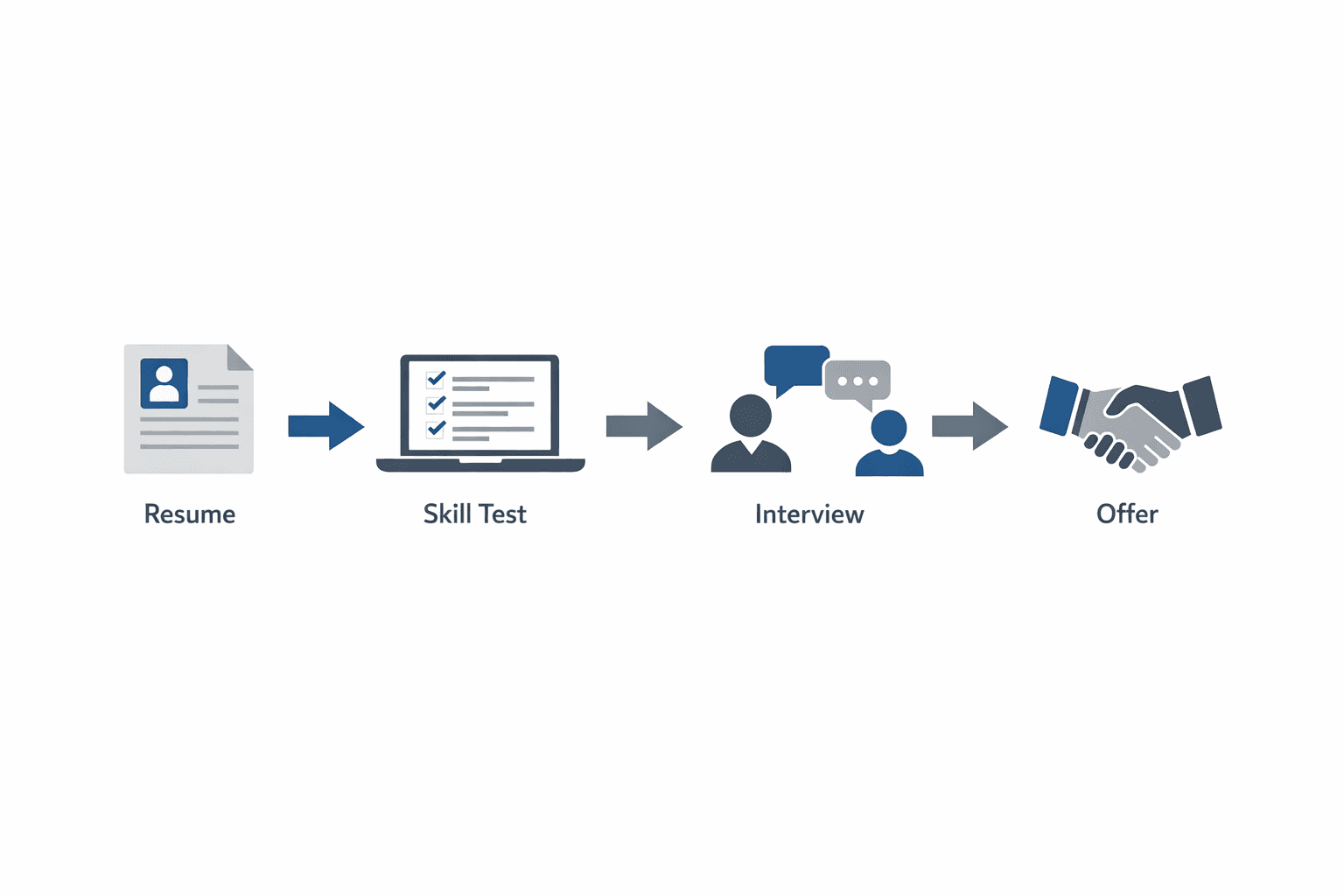
What is a skill test?
A skill test is a structured assessment used by companies to measure whether a candidate can perform the basics required for a role. It is designed to be more objective than resumes, because it checks real ability—like problem-solving, coding, reasoning, or workplace judgement.
Many employers use a mix of tests, depending on the role. For developer hiring, skills-based assessments are common, and platforms track how frequently companies invite candidates to such assessments and what they test for.
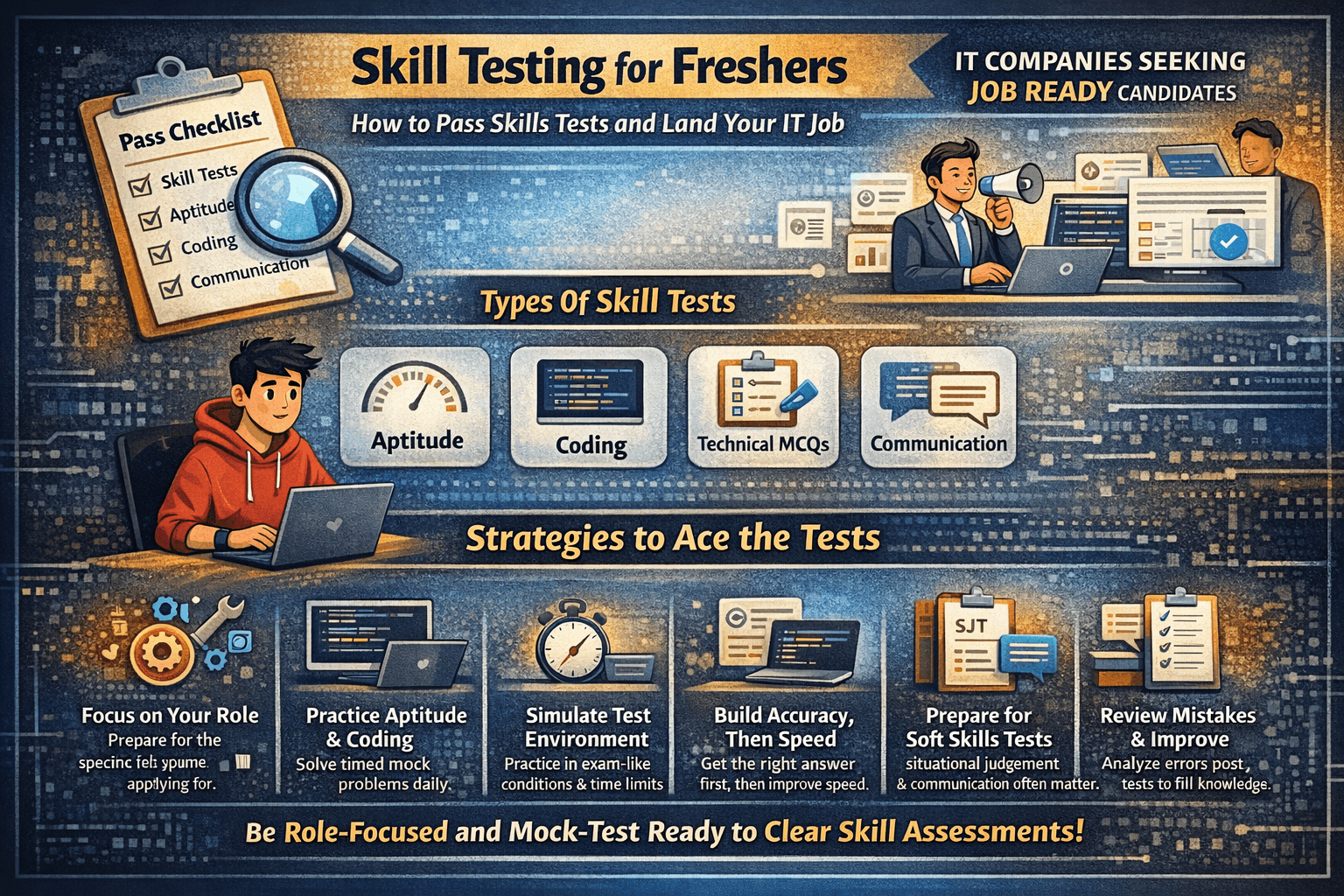
Types of skill tests companies use for freshers
Most fresher hiring processes in India include some combination of the following:

1) Aptitude and reasoning tests
These check speed and accuracy in:
Quant basics (percentages, ratios)
Logical reasoning
Verbal ability (reading and comprehension)
These are common in service companies and large fresher drives.
2) Coding tests (for developer roles)
Coding tests usually check:
Writing correct code (logic + syntax)
Handling edge cases
Basic data structures (arrays, strings, hash map, stack/queue)
Many companies use online coding assessments because they provide quick, standardized screening for developer roles.
3) Technical MCQs (core CS + tools)
These are common for entry-level roles and may include:
OOP basics
DBMS + SQL fundamentals
OS and networking basics
Basic cloud/tool awareness (sometimes)
4) Situational Judgement Tests (SJTs)
These are increasingly used to evaluate workplace decision-making—how you react to real office situations, conflicts, priorities, and communication choices. SHL’s examples explain SJTs as tests where candidates choose the most appropriate action in workplace scenarios.
5) Communication or written tests (some roles)
Some companies include:
Email writing
Short explanation questions
Video/voice responses (for client-facing roles)
How to strategize skill tests (so you clear them)
Freshers often prepare “more”, but not “right”. Use this strategy.
1) Prepare for the job role, not for everything
If you are applying for a developer role, your priority is:
Coding + DSA basics + debugging + APIs/SQL basics
If you are applying for QA, focus more on:Testing basics + SQL + API testing + basic automation concepts
2) Use the “learn → practice immediately” method
After learning any concept, solve 5–10 problems on it the same day. This is a proven way to turn theory into skill and reduce forgetting.
3) Time-box your practice (mock test style)
Skill tests are timed. So practice like this:
20 minutes aptitude set
45 minutes coding (1–2 problems)
15 minutes review mistakes
4) Build accuracy first, then speed
In online tests, one silly mistake can fail multiple test cases. Train yourself to:
Read input/output carefully
Check constraints
Test with 2–3 edge cases before submitting
5) Don’t ignore “soft skill” assessments
SJTs and communication rounds are not “extra”. They matter because freshers work in teams. Practice:
Clear, calm responses
Prioritization
Professional workplace judgement
6) Review your errors like a tracker, not like a failure
After every test, note:
Topic you got wrong
Why you got it wrong (concept gap vs silly mistake)
One action for next time (formula, pattern, practice set)
This single habit improves performance faster than random grinding.
Final takeaway
Skill testing is not meant to scare freshers. It is meant to standardize hiring and identify candidates who have job-ready basics. With a simple, role-focused plan—fundamentals + timed practice + mistake review—you can clear skill tests consistently.
If you want a structured, India-specific preparation path with project practice, mock tests, and placement support, VibrantMinds Technologies Pvt Ltd can help freshers prepare for real assessment patterns used by service and product companies—without wasting time on irrelevant topics.
Join WhatsApp Groups for Updates
Group 1: CLICK HERE> https://chat.whatsapp.com/KAXuSLpag96DcdMDsphFrO
📢 Don’t forget to forward this message to your friends and help them kick-start their careers


