Tools Every IT Fresher Should Learn to Get Hired in 2026
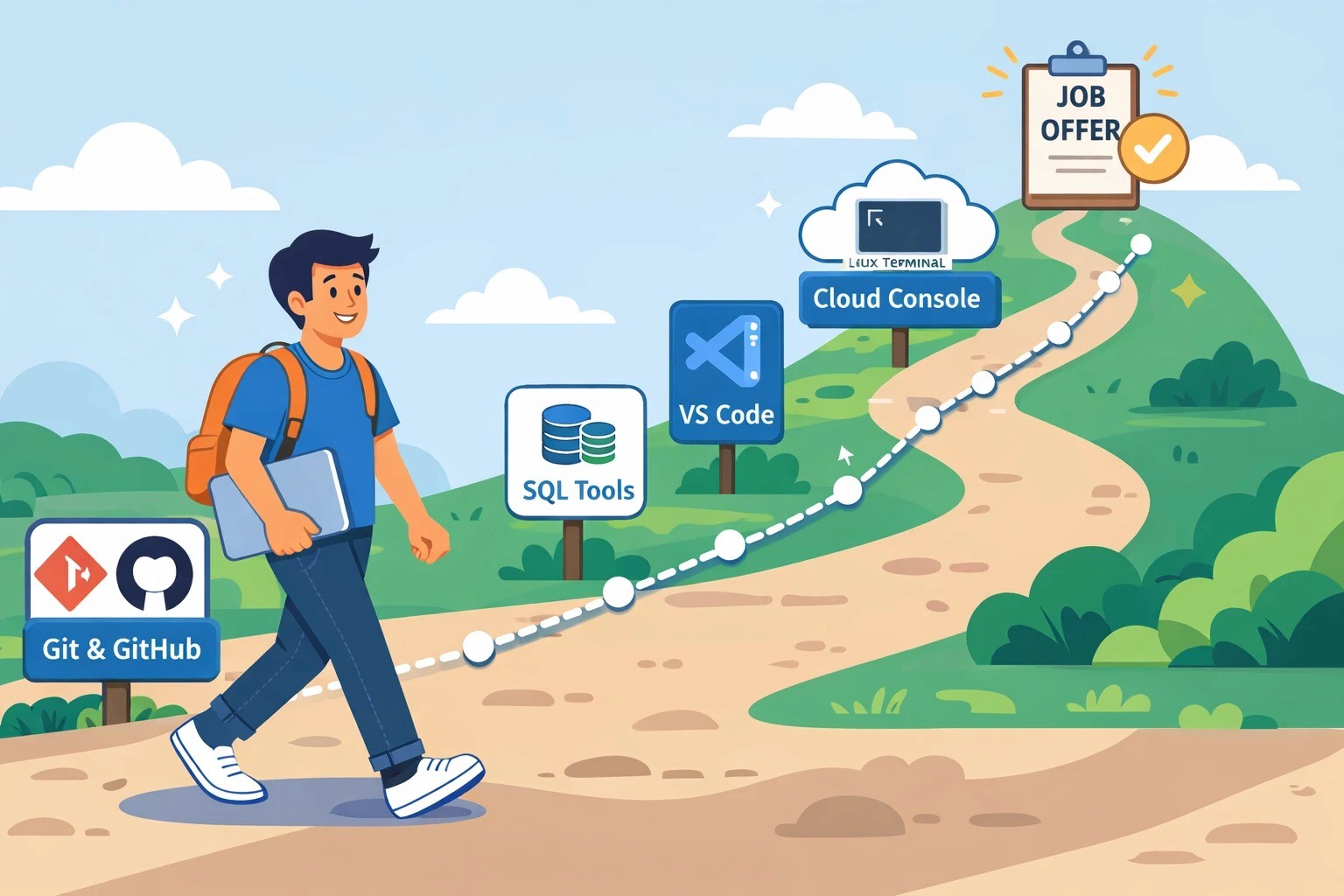
Tools alone won’t get you hired—but not knowing them will reject you fast. Here are the must-learn tools every IT fresher in India should know in 2026, explained simply with real hiring context.
Why tools matter more than degrees in 2026
IT hiring in India has changed in recent years. Campus placements are fewer, and off-campus recruitment has become more competitive. Today, recruiters assume that every IT fresher knows basic programming. What truly decides job readiness now is how well you can use industry tools.
Service-based companies expect freshers to be project-ready from day one. Product-based companies look for candidates who are comfortable working with real-world tools and development environments. If you already know one programming language and have built basic projects, this guide will help you prepare for IT jobs in 2026.
1. Git & GitHub
Git helps you track changes in your code. GitHub is a place where you store that code online.
Companies don’t want code files sent on WhatsApp or email. They want code saved properly with history.
How you’ll use it as a fresher:
Save your project code
Fix mistakes without losing old work
Show your work to recruiters
Why it matters
Almost every IT team in India uses Git. Recruiters often check your GitHub before reading your resume.
What you must know
Creating repositories
Commit, push, pull
Branching and merge basics
Reading someone else’s code

Where it’s used
Full-stack: daily code collaboration
QA: test scripts + automation repos
Python: automation and data scripts
👉 If you don’t use Git, your project is treated like a college assignment.
2. SQL Tools – Because data exists everywhere
SQL tools let you write and run SQL queries on actual databases. In companies, data is already stored in tables. You must fetch, check, and fix data.
How you’ll use it:
Find user details
Check wrong or missing data
Validate application results
Why it matters
Freshers are rejected because they know SQL syntax but can’t use SQL tools.
What to learn
Writing queries inside a DB client
Running joins on real tables
Basic indexing awareness
Exporting and validating data
Where it’s used
Full-stack: backend APIs
QA: data validation
Python: automation + reports
3. API Testing Tools
API tools help you test how different parts of an application talk to each other. Most apps today are not just screens. They are connected systems.
How you’ll use it:
Test login APIs
Check responses (success or error)
Validate data sent by backend
Why it matters
Modern applications talk via APIs. Manual testing alone is not enough.
What to learn
Sending GET/POST requests
Reading JSON responses
Validating status codes
Basic auth and headers
Where it’s used
QA: API + regression testing
Full-stack: backend verification
Python: automation workflows
👉 Knowing API tools instantly upgrades a tester to job-ready.
4. Build & Package Tools – Many freshers ignore this
These tools help your project download required files and run without errors. In companies, no one fixes your setup issues for you.
How you’ll use it:
Run projects on your laptop
Add new libraries
Fix dependency errors
Why it matters
Your code must run, not just compile.
What to learn
For Java: build & dependency tools
For JavaScript: package managers
Running projects locally without errors
Where it’s used
Full-stack: app setup
Python: dependency handling
QA: running automation suites
5. Linux & Command Line – Silent eliminator
Linux is an operating system used on servers. Command line is how you control it. Most company servers don’t have mouse clicks. Only commands.
How you’ll use it:
Run programs
Check logs
Move files
Restart services
Why it matters
Most production systems run on Linux. Many freshers panic at a terminal.
What to learn
Navigating folders
Running scripts
Reading logs
Basic permissions
Where it’s used
Dev: server deployments
QA: test environments
Python: automation + cron jobs
👉 You don’t need to be an expert.
You must not be afraid of the terminal.
6. Testing & Automation Tools – Even for developers
These tools help test applications automatically instead of clicking again and again. Quality matters from day one.
How you’ll use it:
Write simple test cases
Run tests after code changes
Catch bugs early
Why it matters
Quality is no longer “QA’s job only”.
What to learn
Writing basic test cases
Understanding automation flow
Running test reports
Where it’s used
QA: core skill
Full-stack: unit testing
Python: automation scripts
👉 Developers who understand testing are hired faster.
7. Cloud Basics & Deployment Tools
Cloud tools help put your application on the internet. Companies expect freshers to understand deployment basics.
How you’ll use it:
Deploy a sample app
Understand environments
Test live applications
Why it matters
Indian companies now deploy early, not after years.
What to learn
What cloud really is (not definitions)
Deploying a simple app
Understanding environments (dev, test, prod)
Where it’s used
Full-stack: live projects
Python: automation jobs
QA: test environments
👉 Saying “I’ve deployed once” beats “I’ve only coded”.
8. AI Tools – Use them smartly, not blindly
AI tools help explain errors, suggest code, and improve learning speed.
Why it matters
Companies expect freshers to use AI, not depend on it.
Correct usage
Debugging help
Understanding errors
Writing boilerplate
Improving documentation
Wrong usage
Copy-pasting answers
Coding without understanding
Tools by role – quick clarity
Full-Stack (Java / MERN)
Git, SQL tools, API tools, build tools, basic cloud
QA / Testing
API testing tools, automation tools, SQL tools, Linux basics
Python / Automation
Git, Python packages, Linux, scheduling tools, API tools
Why most freshers still struggle
Because they:
Learn tools theoretically
Don’t use them in projects
Can’t explain where they used them
Recruiters don’t want tool names.
They want tool experience.
Final advice for 2026 freshers
You don’t need 50 tools.
You need 8–10 tools used properly.
Join WhatsApp Groups for Updates
Group 1: CLICK HERE> https://chat.whatsapp.com/KAXuSLpag96DcdMDsphFrO


