Skills Every IT Fresher Must Have: What Indian Companies Actually Expect
Degrees Are Common, Skills Are Not
Every year, lakhs of IT graduates enter the job market in India with similar degrees, similar syllabi, and similar certificates. Yet, only a fraction get shortlisted easily. The reason is simple: companies hire for skills, not qualifications.
For fresher hiring—whether through campus placements or off-campus drives—companies look for candidates who can adapt quickly, understand systems, and contribute with guidance. This article explains the core skills every IT fresher must have, based on real hiring expectations across Indian IT services and product environments.

Skill Sets vs Job Titles: What Recruiters Look For
Freshers are not expected to be experts. Instead, recruiters evaluate:
Whether you have strong fundamentals
Whether you can apply knowledge practically
Whether you show learning ability and discipline
Skills are usually assessed through:
Resume shortlisting (ATS keywords)
Basic coding or aptitude rounds
Technical interviews
Project discussions
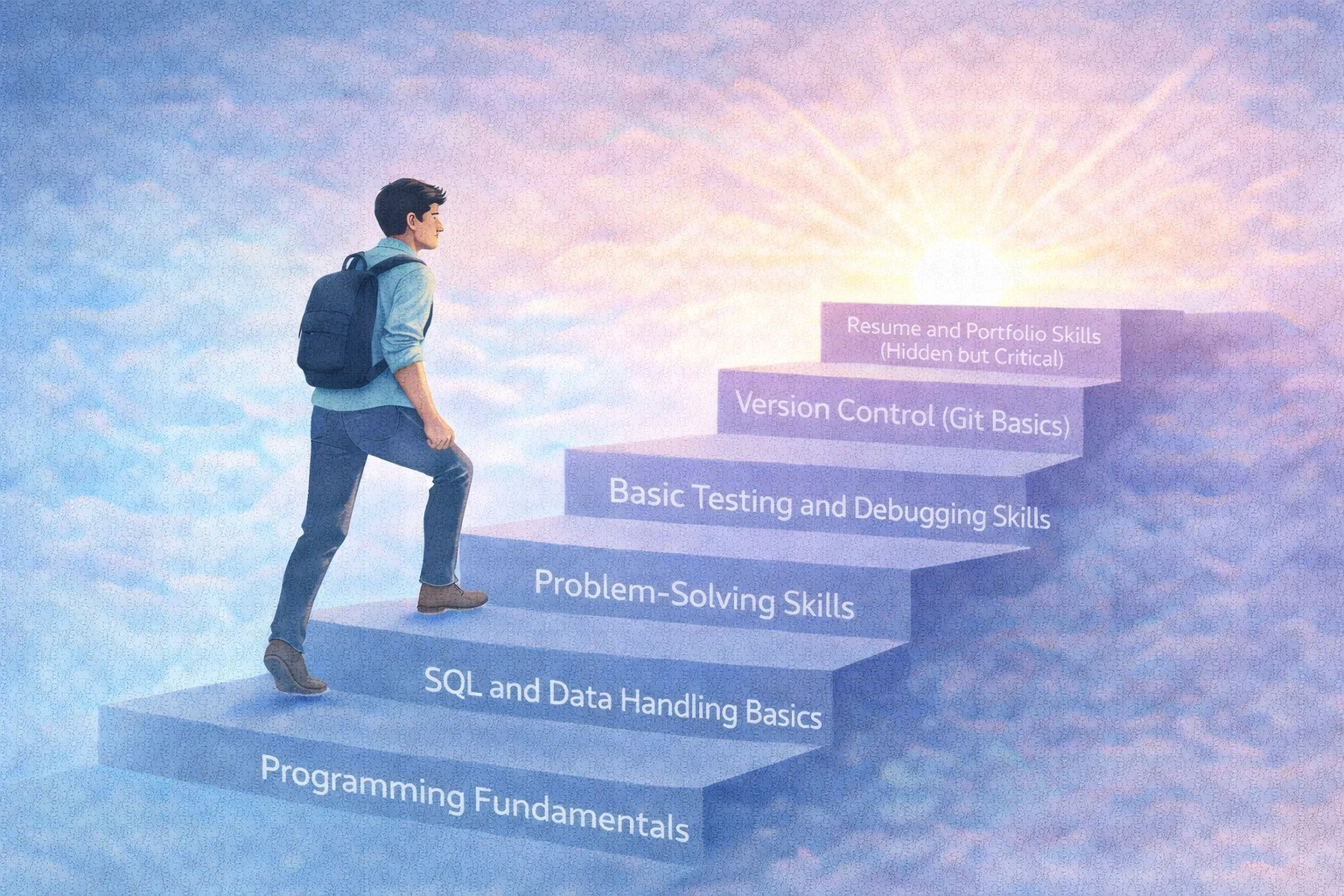
1. Programming Fundamentals (Must-Have)
Every IT fresher must know at least one programming language well.
What “knowing” a language means:
Writing clean, readable code
Using loops, conditions, and functions correctly
Understanding basic data types and error handling
Explaining what your code does
It is better to know one language properly than many languages superficially. Interviewers often test how you think, not how many languages you list.
2. Problem-Solving Skills (More Important Than Syntax)
Companies value how you approach a problem, not just the final answer.
Problem-solving skills help you:
Debug errors
Break large tasks into smaller steps
Handle unexpected issues in real projects
Even in service-based roles, freshers deal with tickets, bug fixes, and small enhancements. Logical thinking and structured problem-solving are essential from day one.
3. SQL and Data Handling Basics
Many entry-level IT roles interact with data in some form.
Every fresher should know:
How to retrieve data using queries
Basic filtering and sorting
Simple joins and aggregations
Understanding table structures
SQL is widely used across development, testing, support, analytics, and operations roles. This is why it appears frequently in interviews and job descriptions
4. Version Control (Git Basics)
In real projects, no one works alone.
Freshers are expected to understand:
How to push and pull code
How to track changes
How to collaborate without overwriting others’ work
Even basic knowledge of version control shows professional readiness and is often checked during interviews or onboarding.
5. Understanding How Applications Work
You don’t need to build complex systems, but you should understand:
How frontend talks to backend
What an API is
How data flows from user to database and back
This understanding helps freshers:
Read existing code faster
Debug issues effectively
Communicate better with team members

6. Basic Testing and Debugging Skills
Freshers are expected to:
Test their own code
Identify errors
Read logs and error messages
Testing mindset is important across roles—not just testing jobs. Employers prefer candidates who check their work instead of assuming it is correct.
7. Communication and Explanation Skills
Many freshers lose opportunities not because of lack of knowledge, but because they cannot explain what they know.
Important abilities:
Explaining project work clearly
Answering questions logically
Asking doubts when needed
Writing basic documentation or comments
Clear communication makes onboarding easier and reduces dependency on seniors.
8. Learning Ability and Attitude
Technology changes constantly. Companies know this.
What they assess instead:
Willingness to learn
Curiosity
Ability to accept feedback
Consistency in effort
Freshers who show learning discipline are preferred over those who only chase certificates
9. Resume and Portfolio Skills (Hidden but Critical)
Your skills must be visible.
A strong fresher resume includes:
Clearly listed technical skills
2–4 solid projects
Tools and technologies actually used
GitHub or project links
Recruiters often decide in under a minute whether to shortlist a resume
Checklist: Skills Every IT Fresher Should Have
Before applying, check:
✅ One programming language with confidence
✅ Basic problem-solving ability
✅ SQL fundamentals
✅ Git basics
✅ At least 2 practical projects
✅ Ability to explain your work
✅ Willingness to learn continuously
If most boxes are ticked, you are job-ready.
Mini Project Ideas to Build These Skills
CRUD application with database
Simple API-based project
Bug-fixing and enhancement project
Small automation script
Data reporting dashboard
Focus on completion and clarity, not complexity.
FAQs
Are soft skills really important for freshers?
Yes. Communication and clarity often differentiate shortlisted candidates from rejected ones.
Is knowing many tools better than knowing basics well?
No. Strong fundamentals are more valuable than shallow tool knowledge.
Can self-learning replace formal training?
Yes, if it results in practical skills and visible output.
Final Thought
Being an IT fresher is not about knowing everything—it is about being ready to learn, contribute, and grow. Focus on building strong fundamentals, real projects, and clear communication. These skills make you employable across roles and industries.
Join WhatsApp Groups for More Updates
Whatsapp : https://chat.whatsapp.com/KLLqUgtTcjULNvcHMesR3z