How Problem-Solving Improves Programming Skills
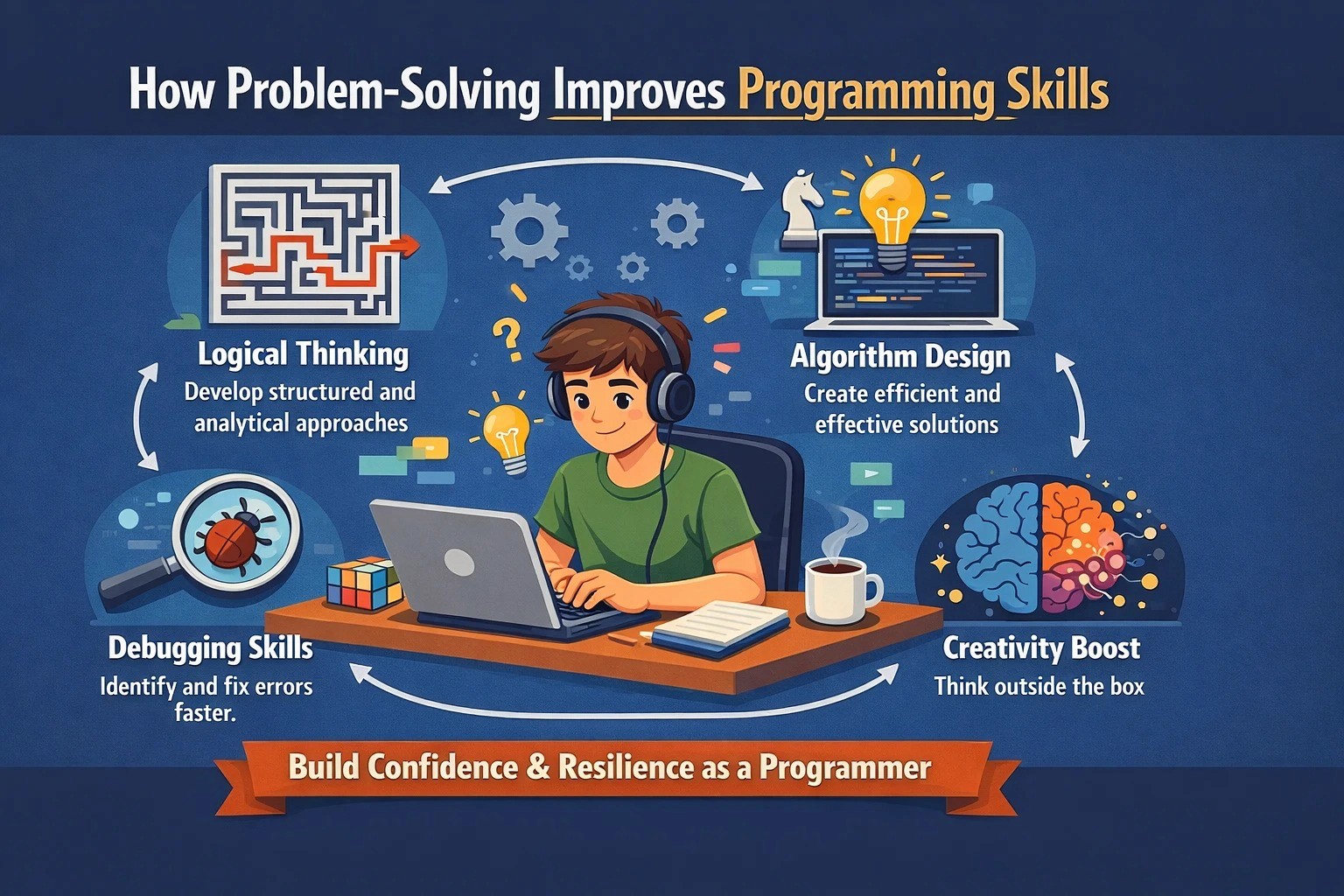
Problem-solving is at the heart of programming. Writing code is not just about knowing syntax or tools. It is about understanding a problem, breaking it into smaller parts, and finding a clear and logical solution. The more you practice problem-solving, the stronger your programming skills become.
Programming Is Solving Problems, Not Typing Code
Every program exists to solve a problem. It may be simple, like validating user input, or complex, like processing large data sets. When you focus on problem-solving, you train your mind to think before you code. This habit reduces guesswork and improves accuracy. Good programmers spend more time thinking about the solution than typing lines of code.
Problem-Solving Builds Logical Thinking
When you solve programming problems, you learn to think step by step. You understand how data flows, how conditions work, and how decisions affect outcomes. This logical thinking helps you write cleaner and more efficient code. Over time, you start predicting issues before they happen, which is a key skill in real-world software development.

Debugging Skills Improve Naturally
Debugging is a form of problem-solving. When code fails, you analyze what went wrong and why. Regular problem-solving practice makes debugging less stressful. Instead of randomly changing code, you learn to trace errors logically. This saves time and builds confidence, especially during interviews and live projects.
Better Understanding of Algorithms and Data Structures
Problem-solving pushes you to choose the right approach for a task. You begin to understand why one algorithm is faster than another or why a certain data structure fits better. This understanding goes beyond theory. It helps you write optimized code and handle performance-related questions in technical interviews.
Encourages Clean and Structured Code
When you solve problems thoughtfully, your code becomes more structured. You use meaningful variable names, break logic into functions, and avoid unnecessary complexity. Clean code is easier to read, test, and maintain. Teams value programmers who can solve problems clearly and communicate their logic through code.
Improves Adaptability Across Technologies
Languages and tools change, but problem-solving skills remain constant. A strong problem-solver can switch from one language to another with ease. Once you understand the logic, syntax becomes secondary. This adaptability is especially important in the fast-changing IT industry.
Builds Confidence for Real Projects and Interviews
Each solved problem boosts confidence. You start trusting your thinking process. This confidence reflects in coding tests, interviews, and on-the-job tasks. Employers look for candidates who can approach unknown problems calmly and logically, not just those who remember syntax.
Conclusion
Problem-solving is not an extra skill in programming. It is the foundation. By practicing problem-solving regularly, you sharpen your logic, improve code quality, and grow as a programmer. Strong problem-solvers become strong developers—capable of learning faster, debugging better, and delivering reliable solutions.
Join WhatsApp Groups for Updates
Group 1: CLICK HERE> https://chat.whatsapp.com/KAXuSLpag96DcdMDsphFrO
📢 Don’t forget to forward this message to your friends and help them kick-start their careers