Why Many Freshers Start in Support Roles (And Why It’s OK)
For many IT graduates in India, the first job offer often comes with a support-related title. This can feel disappointing at first. Freshers may worry that they have missed out on development roles or that their career will slow down before it even starts. In reality, starting in a support role is far more common than most people realize—and it is not a negative reflection of your potential.
The Indian IT hiring model explains much of this trend. A large share of fresher recruitment happens through service-based companies and enterprise projects that operate round the clock. These organizations need reliable teams to support live applications and systems for global clients. As a result, they hire freshers in large numbers for support roles, especially at the entry level. This hiring pattern is driven by business needs, not by a lack of talent among graduates.

Support roles are also easier for companies to onboard freshers into. The work usually follows defined processes, documented steps, and escalation paths. Training periods are shorter, and freshers can start contributing faster with lower risk to live systems. From a company’s point of view, this makes support roles a practical and safe starting point for new graduates who are still adjusting to corporate environments.
Another important reason is the gap between college education and industry expectations. Many freshers have strong theoretical knowledge but limited exposure to real-world projects, large codebases, or production debugging. Development roles often expect practical readiness from day one. Support roles give companies time to train freshers gradually while exposing them to how real applications behave in live environments.
Despite common misconceptions, support roles offer genuine industry exposure. Freshers get to work with live systems, enterprise tools, real customer issues, and cross-functional teams. They learn how applications fail, how issues are diagnosed, and how systems are kept stable under pressure. This kind of exposure builds a strong foundational understanding of how IT systems operate in the real world.
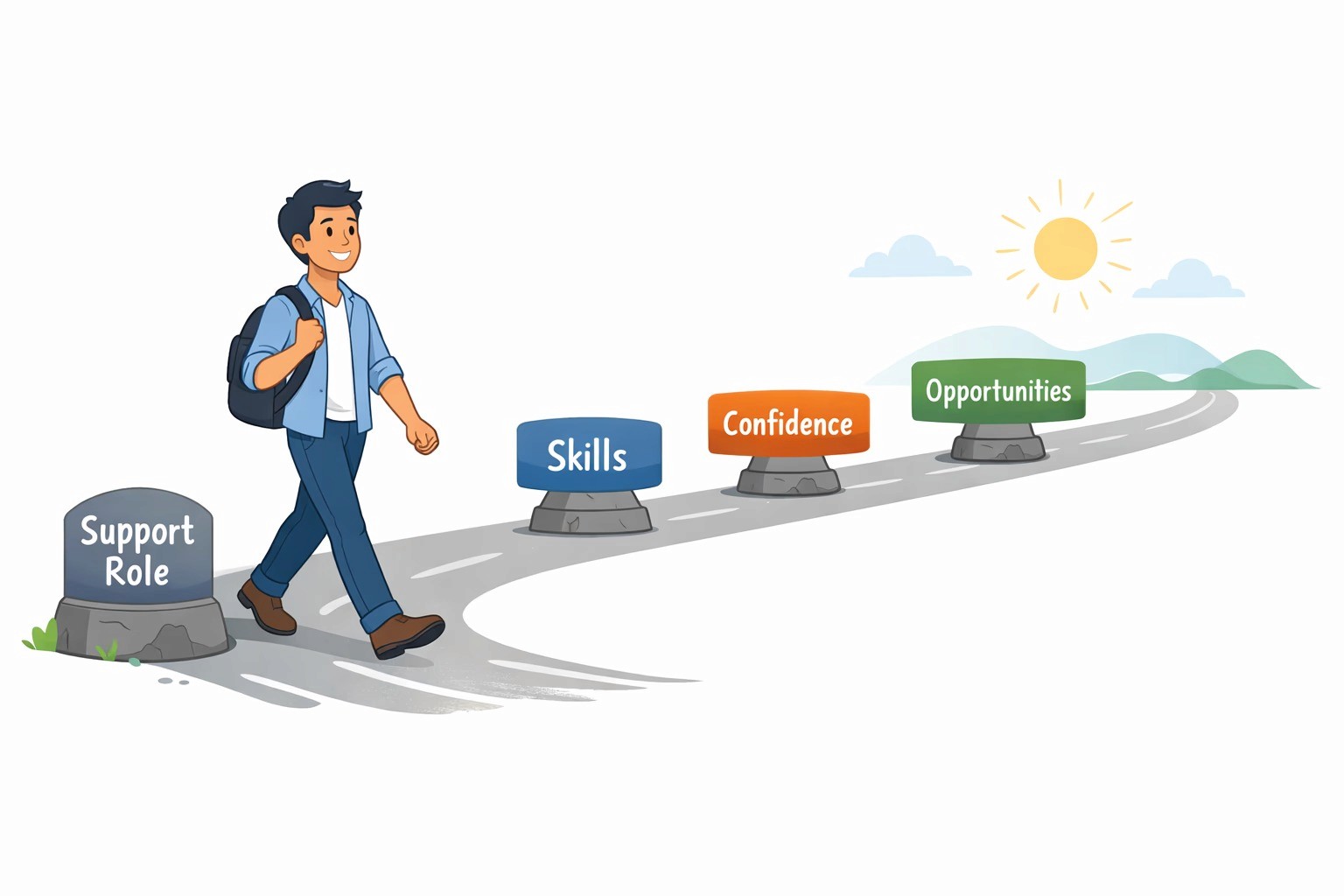
Starting in support is absolutely okay—as long as freshers are clear about their long-term direction. Support should be treated as a starting phase, not a permanent stop, unless someone consciously chooses an operations-focused career. Many successful developers and technical leads in India began in support roles and moved forward by learning programming alongside their jobs and taking initiative to switch roles within a few years.
The real risk is not the support role itself, but getting too comfortable. Careers tend to slow down when learning stops. Freshers who rely only on experience without upgrading skills often find it harder to move later. On the other hand, those who stay curious, practice coding, and understand how the systems they support are built keep their options open.
Freshers who begin in support roles should focus on continuous learning. Learning one programming language properly, building small projects, understanding the architecture of the applications they support, and asking why issues occur—not just how to close tickets—can make a significant difference. These habits help transform support experience into long-term career strength.
In the Indian IT ecosystem, starting in support is normal and often unavoidable. What truly matters is how consciously you grow after joining. With the right mindset and guidance, support roles can become stepping stones rather than roadblocks.
Training and placement partners like VibrantMinds Technologies Pvt Ltd help freshers bridge the gap between early support roles and growth-oriented technical careers through structured learning and project-based exposure. Your first role is just the beginning—your progress depends on the steps you take next.
Join WhatsApp Groups for Updates
Group 1: CLICK HERE> https://chat.whatsapp.com/KAXuSLpag96DcdMDsphFrO
📢 Don’t forget to forward this message to your friends and help them kick-start their careers