Mock Interviews: Are They Really Useful for Freshers?
Mock Interviews: Are They Really Useful for Freshers?
For many IT freshers in India—especially from Tier-2 and Tier-3 colleges—interviews feel more stressful than exams. You may know the basics of coding, aptitude, or your core subjects, but the moment an interviewer asks a question, your mind goes blank.
This is where mock interviews are often recommended. Seniors, placement cells, coaching institutes, and online platforms all suggest them. But a genuine question remains for freshers:
Do mock interviews really help, or are they just another preparation activity?
The honest answer is: yes, mock interviews are useful—but only when done the right way. This article explains what mock interviews actually do, where they help, where they fall short, and how Indian IT freshers can use them effectively for both campus and off-campus hiring.
What Mock Interviews Are (and What They Are Not)
A mock interview is a practice interview that simulates a real hiring interaction. It may involve technical questions, problem-solving, HR questions, or role-specific discussions.
However, mock interviews are not:
A guarantee of selection
A replacement for learning fundamentals
A shortcut to confidence without preparation
They are a practice tool, not a magic solution.

Why Mock Interviews Matter in the Indian IT Hiring Context
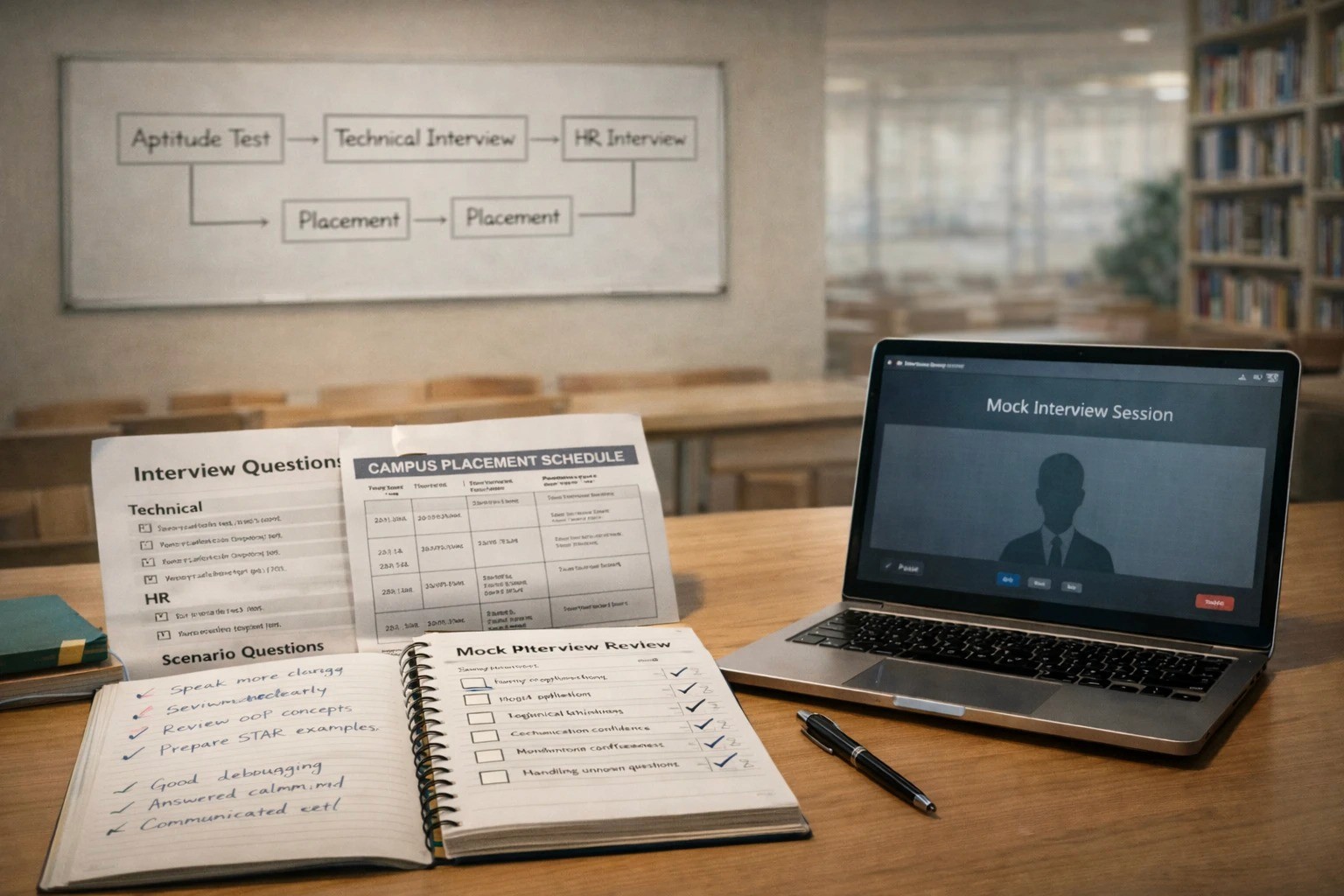
Indian IT hiring—especially for freshers—follows a structured pattern, particularly in campus placements:
Aptitude or screening test
Technical interview (sometimes multiple rounds)
HR or managerial discussion
Service companies focus on trainability, communication, and fundamentals, while product companies emphasize problem-solving, coding clarity, and thinking depth.
Mock interviews help freshers prepare for how they are evaluated, not just what they study.
The Real Benefits of Mock Interviews for Freshers
1. They Reduce Interview Anxiety
Most interview fear comes from uncertainty, not lack of knowledge. Mock interviews make the process familiar—how questions are asked, how silence feels, and how to think aloud.
2. They Expose Gaps You Didn’t Know You Had
Many freshers believe they “know the topic” until they try explaining it verbally. Mock interviews reveal:
Weak explanations
Shallow understanding
Gaps between theory and application
3. They Improve Communication and Structure
Interviewers don’t just check answers—they observe how you think and explain. Mock interviews train you to:
Answer in steps
Clarify assumptions
Speak calmly and logically
4. They Help Role-Specific Readiness
For roles like QA, support, data analysis, or DevOps, mock interviews help you practice scenario-based questions, not just definitions.
The Limitations (Cons) of Mock Interviews
1. Poorly Designed Mocks Can Mislead
If the mock interviewer lacks real hiring exposure, feedback may be inaccurate or overly generic.
2. Repeated Mocks Without Improvement Don’t Help
Doing multiple mock interviews without fixing feedback leads to false confidence, not progress.
3. Over-Reliance Can Reduce Self-Study Time
Mock interviews work best after preparation, not instead of it.
Types of Mock Interviews Freshers Can Use
1. Peer-to-Peer Mock Interviews
Best for: Early practice
Pros: Comfortable, frequent, low pressure
Cons: Limited depth if both peers are beginners
2. College / Faculty / TPO Mocks
Best for: Campus hiring simulation
Pros: Structured, closer to real interviews
Cons: Often limited in number
3. Senior or Alumni Mocks
Best for: Realistic feedback
Pros: Industry perspective, practical advice
Cons: Availability may be limited
4. Online / AI-Based Mock Interviews
Best for: Self-paced practice
Pros: Consistency, repeatability
Cons: Feedback may lack context or nuance
A combination works best.
How to Do Mock Interviews the Right Way
Step 1: Prepare Before the Mock
Never treat a mock as a test. Treat it as learning.
Revise basics
Prepare common questions
Be clear about the role you’re practicing for
Step 2: Simulate Real Conditions
Dress neatly
Sit upright
Avoid notes
Answer aloud
The goal is realism.
Step 3: Focus on Feedback, Not Scores
Feedback matters more than “pass/fail.”
Mock Interview Feedback Scorecard (Simple)
Rate yourself from 1–5 on:
Clarity of explanation
Logical thinking
Technical correctness
Communication confidence
Handling unknown questions
Track improvement, not perfection.
Mock Interview Checklist for Freshers
Before each mock:
✔ Revise fundamentals
✔ Prepare self-introduction
✔ Review role basics
During:
✔ Think aloud
✔ Ask clarifying questions✔ Stay calm if stuck
After:
✔ Write down feedback
✔ Identify 2–3 improvement points
✔ Practice before the next mock
A Realistic Weekly Mock Interview Plan
Week 1–2:
One peer mock
Focus on basics and communication
Week 3–4:
One faculty/senior mock
Improve explanation and structure
Final Month:
1–2 mocks per week
Full interview simulation
Always leave time between mocks to improve.
Final Verdict: Are Mock Interviews Really Useful?
Yes—but only when used as a feedback and improvement tool, not as a confidence shortcut.
For Indian IT freshers:
Mock interviews don’t replace preparation
They reveal readiness gaps
They improve communication and confidence
They reduce avoidable interview mistakes
The most successful freshers are not those who do the most mock interviews—but those who learn from each one.
Final Advice for Freshers
If interviews scare you, don’t avoid them—practice them.
Mock interviews won’t make you perfect, but they will make you prepared. And in the Indian IT hiring reality, preparation always shows
👉 Join WhatsApp Groups for Updates