How Freshers Can Build a Strong Resume With Zero Work Experience
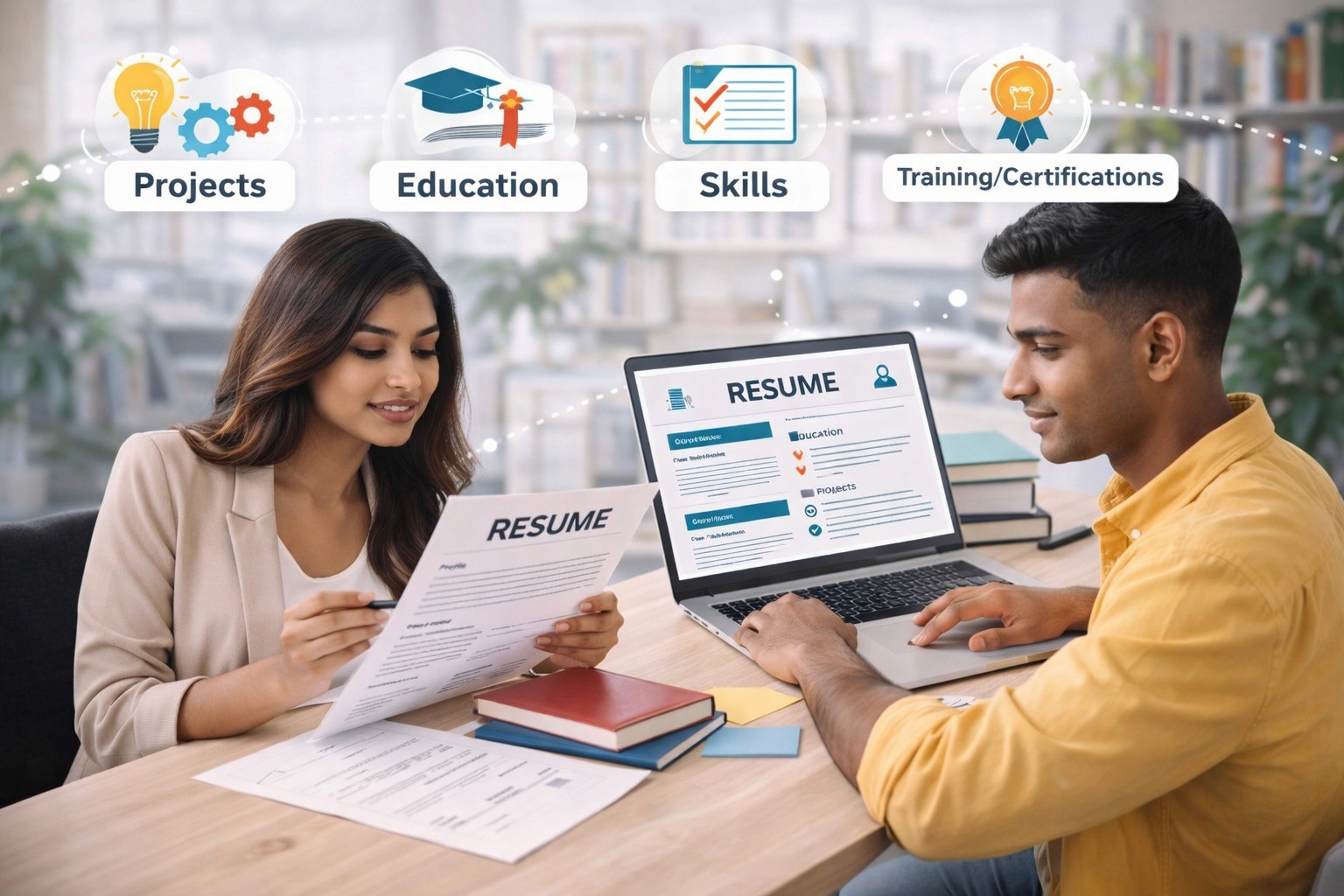
Many freshers believe that without work experience, their resume has no value. This is one of the biggest myths in the job market.
Recruiters know that freshers may not have professional experience. What they look for instead is potential, skills, clarity, and effort. A well-structured resume can impress employers even if you have never worked in a company before.
This guide explains how freshers can build a strong resume from scratch.
1. Start With a Clear and Professional Header
Your resume should begin with:
Full Name
Phone Number
Professional Email ID
LinkedIn profile (if available)
Portfolio or GitHub link (if relevant)
Keep it clean and simple. Avoid unnecessary details like full address or personal information.
2. Write a Strong Career Objective
Since you do not have experience, your career objective becomes important.
Focus on:
Your skills
Your learning attitude
The type of role you are targeting
How you can add value
Example:
“A motivated computer science graduate with strong problem-solving skills and hands-on project experience, seeking an entry-level software developer role to contribute and grow in a dynamic environment.”
Keep it short and specific.
3. Highlight Your Education Properly
For freshers, education plays a major role.
Mention:
Degree and specialization
College or university name
Year of graduation
Percentage or CGPA (if strong)
Relevant coursework
If you have academic achievements, include them.
4. Showcase Academic and Personal Projects
Projects are your practical proof of skills.
For each project, mention:
Project title
Technologies used
Your role
Key features
Outcome or impact
Instead of writing:
“Made a website.”
Write:
“Developed a responsive e-commerce website using HTML, CSS, and JavaScript with user login and payment integration features.”
Be specific.
5. Add Relevant Skills (Technical + Soft Skills)
Divide skills into categories.
Technical Skills
Programming languages
Tools and software
Technologies
Platforms
Soft Skills
Communication
Teamwork
Time management
Problem-solving
Adaptability
Only include skills you truly know. Be prepared to explain them in interviews.
6. Include Internships and Training (If Any)
Even short-term internships or online training programs add value.
Mention:
Organization name
Duration
Key responsibilities
Skills learned
If you completed certifications, list them under a separate section.
7. Add Achievements and Extracurricular Activities
Recruiters appreciate well-rounded candidates.
Include:
Competition participation
Hackathons
Leadership roles
Volunteer work
College event coordination
These show initiative and responsibility.
8. Use Action Words
Strong action words make your resume powerful.
Examples:
Developed
Designed
Implemented
Analyzed
Coordinated
Optimized
Created
Avoid passive language.
9. Keep the Resume Short and Structured
For freshers, a one-page resume is ideal.
Follow a clean format:
Header
Career Objective
Education
Skills
Projects
Internships/Certifications
Achievements
Use simple fonts and proper spacing.
10. Customize Your Resume for Every Job
Do not send the same resume everywhere.
Before applying:
Read the job description carefully
Identify required skills
Modify your resume accordingly
Highlight relevant projects
Tailoring increases your chances of shortlisting.
Common Mistakes Freshers Should Avoid
Adding fake experience
Writing long paragraphs
Using unprofessional email IDs
Including unnecessary personal details
Making spelling and grammar errors
Honesty and clarity are important.
What Recruiters Actually Look For in Freshers
Recruiters evaluate:
Skill clarity
Learning mindset
Practical exposure through projects
Communication ability
Confidence
They hire potential, not just experience.
Final Conclusion
Having zero work experience does not mean having zero value.
Freshers can build a strong resume by highlighting education, projects, skills, and achievements strategically. A well-crafted resume reflects effort, direction, and professionalism.
Remember, your resume is not just a document.
It is your first impression.
Build it smartly, present it confidently, and let your potential speak louder than experience.
Join WhatsApp Groups for Updates


