Why Freshers Struggle to Convert Interviews into Offers
Why Freshers Struggle to Convert Interviews into Offers
Many freshers reach the interview stage but fail to convert those interviews into job offers. This creates frustration, self-doubt, and confusion, especially when they feel technically prepared. The reality is that interviews evaluate much more than just knowledge. Understanding the real reasons behind rejections can help freshers fix gaps and improve their chances of getting hired.
Interviews Are Not Just Skill Tests
Freshers often believe that interviews are only about answering technical questions correctly. In reality, companies use interviews to judge overall job readiness.
Interviewers look for:
Clarity of thought
Confidence in communication
Problem-solving approach
Attitude towards learning
Ability to handle pressure
Even strong technical candidates can get rejected if they fail to demonstrate these qualities.
Lack of Clear Communication
One of the biggest reasons freshers fail interviews is poor communication. This does not always mean weak English. It often means unclear explanations.
Common communication issues:
Giving very short or very long answers
Explaining without structure
Struggling to explain thought process
Not asking clarifying questions
Interviewers prefer candidates who can explain ideas logically, even if the answer is not perfect.
Memorized Knowledge Instead of Understanding
Many freshers prepare by memorizing answers from notes, videos, or online sources. This works for written tests but fails in live interviews.
Problems with memorized preparation:
Unable to answer follow-up questions
Confusion when questions are twisted
Panic when asked real-world scenarios
Interviewers can easily detect whether a fresher truly understands a concept or has only memorized definitions.
Weak Problem-Solving Approach
In interviews, how you think matters more than what you know.
Freshers struggle when they:
Jump to answers without analysis
Do not explain their approach
Get stuck if the first idea fails
Depend only on known patterns
Companies want freshers who can break down problems, think step by step, and adapt when stuck.
Overconfidence or Underconfidence
Both extremes hurt interview performance.
Overconfidence leads to:
Ignoring interviewer hints
Rushing answers
Sounding rigid or arrogant
Underconfidence leads to:
Doubting correct answers
Saying “I don’t know” too quickly
Poor body language
Balanced confidence, honesty, and willingness to learn create a better impression.
Poor Understanding of the Job Role
Many freshers apply to multiple roles without understanding what the job actually requires.
This results in:
Irrelevant answers
Confusion during role-specific questions
Lack of interest shown during discussion
Interviewers expect candidates to have at least a basic understanding of the role they applied for.
No Real Examples to Share
Freshers often give generic answers because they lack real examples.
Common mistake:
Speaking only in theory
Not linking answers to projects or training
Avoiding practical discussion
Even small academic projects, internships, or self-learning tasks can be used to demonstrate experience if explained properly.
Inability to Handle Behavioral Questions
Technical interviews also include behavioral and HR questions.
Freshers struggle with:
“Tell me about yourself”
“How do you handle failure”
“Why should we hire you”
These questions test attitude, self-awareness, and professionalism, not technical skill.
Poor Interview Preparation Strategy
Many freshers prepare randomly without a clear plan.
Common preparation gaps:
Focusing only on coding or theory
Ignoring mock interviews
Not reviewing previous interview mistakes
Without structured preparation, improvement becomes slow and inconsistent.
Fear of Rejection Affecting Performance
Past rejections often impact confidence.
Effects include:
Nervousness during interviews
Overthinking simple questions
Loss of focus
Interviewers can sense hesitation and lack of confidence, which affects hiring decisions.
What Freshers Can Do to Convert Interviews into Offers
Improvement is possible with the right approach.
Freshers should focus on:
Understanding concepts instead of memorizing
Practicing explanation of answers aloud
Doing mock interviews regularly
Learning to explain mistakes honestly
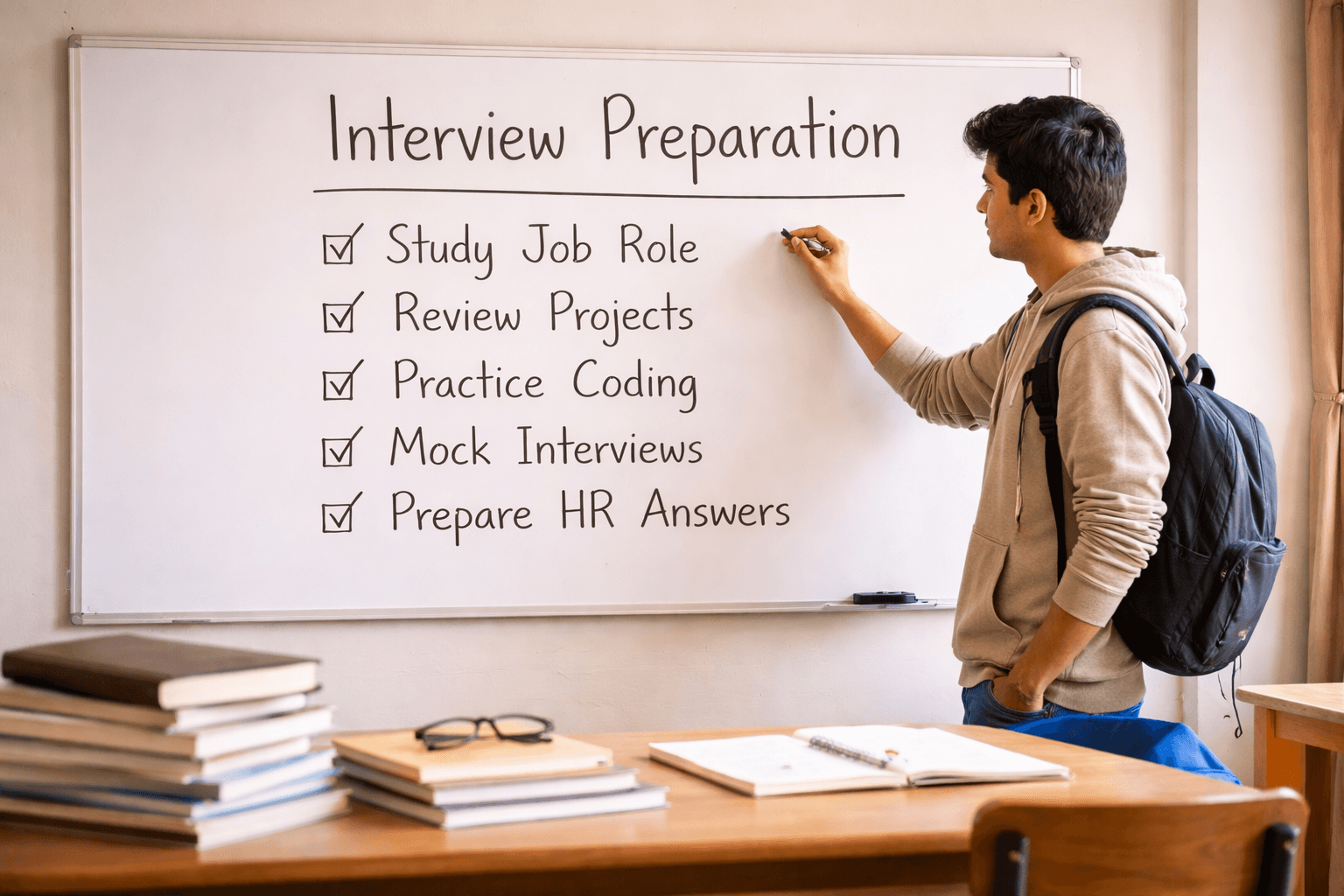
Studying job roles before interviews
Improving communication through practice
Reflecting after every interview
Consistency and awareness bring gradual but strong improvement.
Failing to convert interviews into offers does not mean a fresher is incapable. It usually means some important areas are being overlooked. Interviews test readiness, not perfection. When freshers focus on clarity, understanding, communication, and mindset, their chances of success increase significantly.
Every interview is feedback. Those who learn from it move closer to their first job offer.